

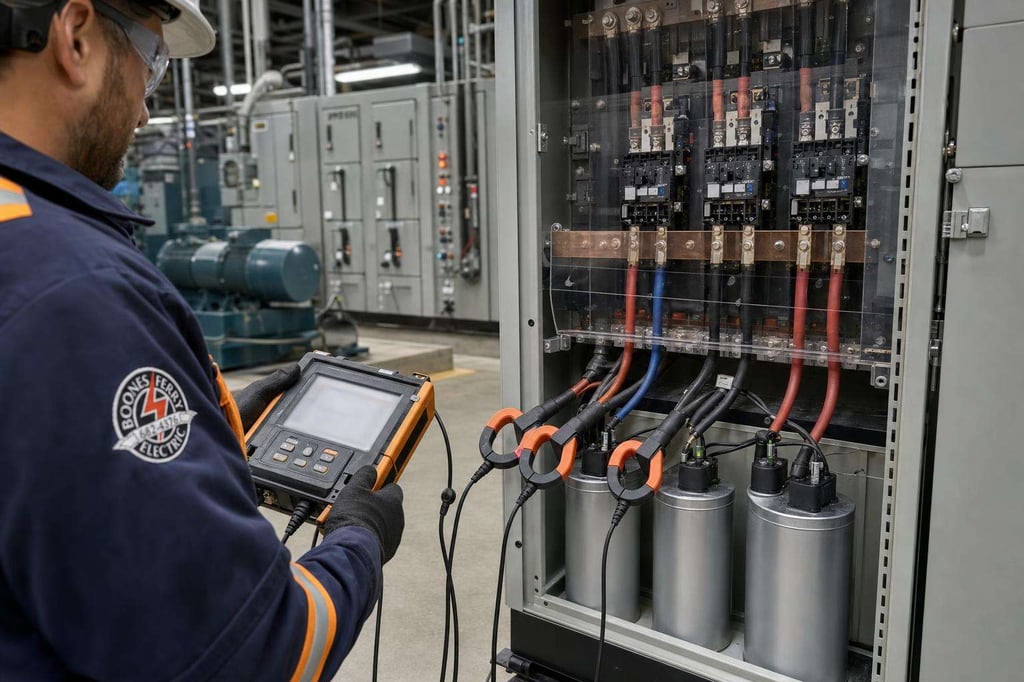
Power Factor Correction for Industrial Facilities With High Energy Demand
Industrial facilities rely on large motors, compressors, pumps, HVAC systems, welders, and production equipment that place significant demand on the electrical system. When that equipment does not use power efficiently, the facility may experience a poor power factor, which can increase strain on equipment and reduce available electrical capacity.
For businesses in Wilsonville, the Portland Metro area, Tualatin, Lake Oswego, and Oregon City, power factor correction can be an important part of long-term electrical planning. Boones Ferry Electric provides industrial electrical services and commercial electrical services designed to help facilities operate safely, efficiently, and with room for future growth.
What Is Power Factor?
Power factor is a measure of how effectively electrical power is being converted into useful work. In simple terms, it compares the power your equipment uses to do actual work with the total power supplied to the system.
Many industrial loads, especially motors and transformers, require both:
- Real power, which performs useful work such as turning a motor or running equipment.
- Reactive power, which supports magnetic fields needed by certain equipment but does not perform usable work by itself.
When reactive power is high, the facility may need more current to perform the same amount of work. That is where power factor correction may help.
Why Power Factor Matters in High-Demand Facilities
For industrial facilities, poor power factor can affect more than a utility bill. It can influence how well your electrical infrastructure supports daily operations, future equipment additions, and overall system performance.
A power factor evaluation may be useful if your facility has:
- Large motors or motor control centers
- Air compressors, pumps, chillers, or refrigeration equipment
- Frequent equipment starts and stops
- High electrical demand during production hours
- Planned machinery upgrades or expanded operations
- Utility notices related to demand, reactive power, or power factor
A licensed electrician can review your electrical distribution, load profile, equipment types, and utility information to determine whether correction equipment is appropriate.
How Power Factor Correction Works
Power factor correction typically involves adding equipment that offsets reactive power demand. The most common solution is a capacitor bank, although the right approach depends on the facility, load conditions, and equipment sensitivity.
Common Correction Methods
- Fixed capacitor banks: Often used where loads are steady and predictable.
- Automatic capacitor banks: Switch correction stages on and off as demand changes throughout the day.
- Detuned or filtered systems: Used where harmonics or variable frequency drives may affect system performance.
- Load-specific correction: Installed near individual motors or equipment when appropriate.
Because industrial environments can include sensitive controls, drives, and production equipment, power factor correction should be designed carefully. Electrical work should always be evaluated and completed by a licensed professional.
Signs Your Facility May Need a Power Factor Review
Power factor problems are not always obvious from day-to-day operations. However, there are several reasons to schedule an evaluation with a Portland Metro electrician experienced in industrial electrical services.
- Your facility has recently added high-demand machinery.
- You are planning electrical upgrades or an electrical installation for new production equipment.
- Your utility has provided information about power factor or reactive demand.
- Electrical panels, transformers, or feeders are operating near capacity.
- You want to understand whether existing infrastructure can support future expansion.
- You have recurring electrical repairs related to overloaded or aging equipment.
A qualified Wilsonville electrician can help determine whether the issue is power factor, system capacity, load imbalance, harmonics, aging infrastructure, or a combination of factors.
Benefits of a Properly Designed Power Factor Correction System
When designed and installed correctly, power factor correction can support a more efficient and reliable electrical system. Potential benefits may include:
- Improved use of existing electrical capacity
- Reduced unnecessary current flow through parts of the system
- Less strain on transformers, conductors, and switchgear
- Better planning for equipment expansion and electrical upgrades
- Support for long-term operational efficiency
The exact results depend on your facility’s loads, utility structure, electrical condition, and correction design. A professional assessment is the best way to identify practical options.
Important Considerations Before Installation
Power factor correction is not a one-size-fits-all electrical installation. Installing the wrong equipment or placing it in the wrong location can create new issues, especially in facilities with variable frequency drives, harmonic distortion, or rapidly changing loads.
A professional review should consider:
- Utility billing data and demand patterns
- Motor sizes, start frequency, and operating schedules
- Transformer and panel capacity
- Existing protective devices and grounding
- Harmonics, drives, and sensitive controls
- Future production growth or equipment changes
Boones Ferry Electric can help industrial and commercial customers evaluate these factors and plan electrical services in Wilsonville and the surrounding Portland Metro communities.
Power Factor Correction and Broader Electrical Planning
Power factor correction is often most effective when it is part of a larger electrical system review. If your facility is already planning commercial electrical services, industrial electrical services, electrical upgrades, or new equipment installation, it may be the right time to evaluate power factor as well.
This approach can help your team make informed decisions about:
- Panel and switchgear upgrades
- Transformer loading
- Feeder capacity
- Motor control centers
- Surge protection and power quality
- Future expansion needs
Coordinating these improvements can reduce disruption and help ensure your electrical system is prepared for high-demand operations.
Work With Boones Ferry Electric
If your industrial facility has high energy demand, growing production needs, or questions about power factor correction, Boones Ferry Electric can help. Our team provides dependable industrial electrical services, commercial electrical services, electrical repairs, electrical upgrades, and electrical installation support for businesses in Wilsonville, the Portland Metro area, Tualatin, Lake Oswego, and Oregon City.
Electrical work should always be evaluated and completed by a licensed professional. For help reviewing your facility’s power factor and electrical capacity, contact Boones Ferry Electric today. For practical next steps, Request service and talk with the team about timing, scope, and the right path for your situation.
Frequently Asked Questions
Power factor correction is the process of improving how effectively your facility uses supplied electrical power. It often involves equipment such as capacitor banks that offset reactive power from motors, transformers, and other industrial loads. A licensed electrician should evaluate your system before any correction equipment is selected or installed.
Your facility may benefit from a review if you operate large motors, compressors, pumps, chillers, or production equipment, or if your utility has referenced power factor or reactive demand. A professional evaluation can determine whether power factor is the issue or whether other electrical upgrades are needed.
In some facilities, improving power factor may reduce unnecessary current flow and help existing electrical infrastructure operate more effectively. However, it is not a substitute for every capacity issue. A licensed electrician should review panels, transformers, feeders, and equipment loads to recommend the right solution.
It can be, but the system must be designed carefully. Facilities with variable frequency drives, harmonics, or sensitive controls may require filtered or detuned correction equipment. Installing the wrong system can create performance problems, so a professional power quality review is important.
Boones Ferry Electric provides industrial electrical services and commercial electrical services for facilities in Wilsonville, the Portland Metro area, Tualatin, Lake Oswego, and Oregon City. The team can evaluate your electrical system and help determine whether power factor correction or other electrical upgrades are appropriate.