

Why electrical service records matter for property managers
When a tenant reports flickering lights, a tripped breaker, a warm outlet, or a power loss in part of the building, the first call is often urgent. Having the right electrical records ready can help a licensed electrician understand the property faster, ask better questions, and plan the safest next step.
For property managers in Wilsonville, Tualatin, Lake Oswego, Oregon City, and the greater Portland Metro area, organized records are especially helpful when managing multiple units, mixed-use properties, commercial spaces, or older buildings with past electrical upgrades. Clear documentation can also reduce back-and-forth between tenants, owners, maintenance teams, and vendors.
Electrical work should always be evaluated and completed by a licensed professional. The records below are not a substitute for an onsite assessment, but they can make that assessment more efficient.
Start with the current service request details
Before calling for electrical services in Wilsonville or the surrounding Portland Metro area, collect the basic details of the issue from the tenant, onsite contact, or maintenance team.
Information to document
- Property address and unit number: Include building, floor, suite, or meter location if applicable.
- Tenant contact information: Provide the best phone number, email, and availability for access.
- Issue description: Note what is happening, where it is happening, and whether it affects one outlet, one room, one unit, or multiple areas.
- Timing: Record when the issue started and whether it is constant, intermittent, or tied to specific equipment use.
- Safety concerns: Mention burning smells, buzzing, visible damage, heat, sparking, or water exposure right away.
- Recent changes: Include appliance replacements, tenant move-ins, remodeling, new equipment, or recent storm activity.
If there is any immediate hazard, keep tenants away from the affected area and contact the appropriate emergency services or utility provider as needed before scheduling standard electrical repairs.
Gather panel and service equipment information
Electrical panels, subpanels, disconnects, and meters tell an electrician a lot about the property before they arrive. This is especially useful for commercial electrical services, multi-unit residential electrical repair, and electrical installation planning.
Useful records to have ready
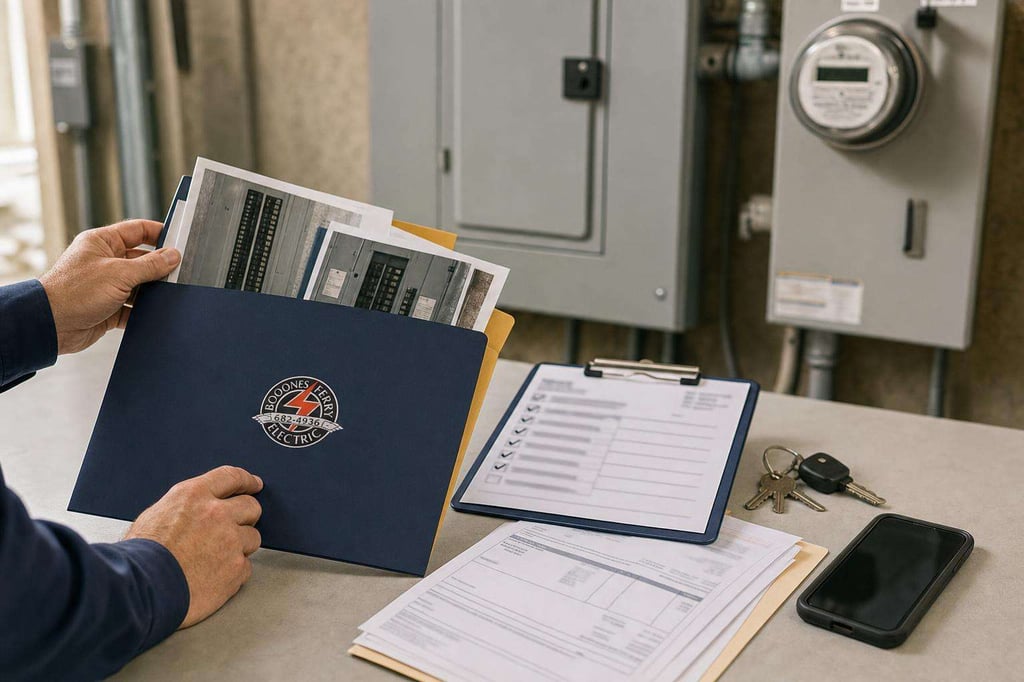
- Panel schedules or circuit directories: Even if they are outdated, they provide a starting point.
- Photos of the electrical panel: Include the panel door label, breaker layout, manufacturer information, and any visible markings.
- Main service size: If known, note the amperage and voltage of the service.
- Subpanel locations: Document panels in garages, mechanical rooms, tenant spaces, basements, or exterior areas.
- Meter information: For multi-tenant properties, clarify whether meters are individually assigned or shared.
- Access requirements: Note keys, alarm codes, gate codes, mechanical room rules, and tenant permission requirements.
For older buildings or properties with several remodels over time, panel labeling may not match the current layout. A Wilsonville electrician can verify circuits onsite and recommend updates to documentation when needed.
Collect previous repair and upgrade history
Past electrical work can help identify patterns. For example, a recurring breaker trip in the same unit may relate to a specific circuit, load, appliance, or prior repair. If the property has had electrical upgrades, keep those records available.
Records that may help
- Invoices from prior electrical repairs: Include dates, scope of work, and technician notes if available.
- Permit records: Gather permits for panel changes, service upgrades, tenant improvements, remodels, or new circuits.
- Inspection documents: Include final approvals, correction notices, or inspection comments.
- As-built drawings: These can be helpful for larger residential, commercial, and industrial electrical services.
- Owner-approved upgrade plans: Include any planned electrical upgrades, EV charging discussions, lighting retrofits, or tenant improvement documents.
If records are incomplete, do not guess. Let the electrician know what is known and what still needs to be verified in person.
Document tenant equipment and load-related concerns
Many service calls involve equipment that places demand on a circuit. This can include portable heaters, kitchen appliances, office equipment, commercial refrigeration, servers, manufacturing equipment, or specialty tenant machinery.
Questions to ask before calling
- Did the issue begin after a new appliance or piece of equipment was added?
- Does the breaker trip only when certain devices are in use?
- Is the affected area residential, retail, office, restaurant, warehouse, or industrial?
- Are multiple tenants reporting similar issues?
- Has any equipment recently been repaired, relocated, or replaced?
This information helps a Portland Metro electrician determine whether the call may involve a repair, troubleshooting visit, electrical installation, capacity review, or planning for future upgrades.
Prepare access, tenant communication, and site rules
Electrical troubleshooting often requires access to tenant spaces, panels, exterior equipment, utility rooms, roof areas, or mechanical rooms. Property managers can help the visit go smoothly by confirming access in advance.
Access details to provide
- Primary onsite contact: Name and phone number for the person meeting the electrician.
- Tenant notification status: Confirm whether the tenant has approved entry.
- Building rules: Include parking instructions, loading zones, elevator reservations, or check-in procedures.
- Work hour restrictions: Note quiet hours, business operating hours, or tenant availability windows.
- Utility room access: Confirm keys, locks, codes, or management office requirements.
For commercial electrical services, this coordination is particularly important because the electrician may need to limit disruption to customers, employees, or tenant operations.
Include photos and videos when they are safe to capture
Photos can help an electrician understand the situation before arriving, but safety comes first. Property staff and tenants should not remove covers, open equipment, or touch anything damaged or energized.
Helpful images may include
- Outlet, switch, or fixture location from a safe distance
- Visible damage, discoloration, or broken cover plates
- Panel labels and breaker positions
- Equipment nameplates or model information
- Room layout showing where the problem occurs
- Exterior meter or disconnect location
If a tenant reports heat, smoke, sparks, burning odor, or water near electrical equipment, prioritize safety and do not wait to gather photos before seeking help.
Know when the issue may need a higher-priority response
Not every electrical concern is the same. Some issues can be scheduled as standard service, while others require more urgent evaluation by a licensed electrician or coordination with the utility provider.
Report these details immediately
- Burning smell near outlets, panels, switches, or fixtures
- Sparking, arcing, or visible charring
- Warm or hot electrical components
- Repeated breaker trips after reset
- Partial power loss affecting major systems
- Water intrusion near electrical equipment
- Tenant medical equipment affected by power issues
- Commercial or industrial equipment shutdowns that may create safety concerns
Clear, specific information helps the electrical contractor understand the situation and advise on the appropriate next step.
A simple electrical service record checklist
Before contacting Boones Ferry Electric, property managers can use this quick checklist to organize the call:
- Property address, unit, suite, and access instructions
- Tenant or onsite contact name and phone number
- Description of the electrical issue and when it started
- Photos of the affected area and panel labels, if safe
- Panel schedules, circuit directories, and meter information
- Prior electrical repair invoices and upgrade records
- Permit, inspection, or as-built documents if available
- Recent tenant improvements, equipment changes, or appliance additions
- Any safety concerns, odors, heat, sparks, water exposure, or repeated breaker trips
- Preferred scheduling windows and tenant communication status
Having these details ready can support a smoother service experience for residential electrical repair, commercial electrical services, electrical upgrades, electrical installation, and industrial electrical services.
Work with a locally focused electrical team
Boones Ferry Electric provides dependable electrical services for property owners, managers, homeowners, and businesses throughout Wilsonville and the Portland Metro area. Whether you need a Wilsonville electrician for a tenant repair, a Portland Metro electrician for a commercial service call, or support planning electrical upgrades across multiple properties, clear records help the team get started with the right information.
Contact Boones Ferry Electric
If you manage a property in Wilsonville, Tualatin, Lake Oswego, Oregon City, or the surrounding Portland Metro area, gather the records above and contact Boones Ferry Electric for professional electrical support. For practical next steps, Request service and talk with the team about timing, scope, and the right path for your situation.
Frequently Asked Questions
Collect the tenant’s name, phone number, unit or suite number, availability for access, and a clear description of the issue. Ask when the problem started, whether it is constant or intermittent, and whether it affects one outlet, one room, or multiple areas.
Tenants should follow property management policies and avoid interacting with electrical equipment if there is heat, smoke, sparking, burning odor, water exposure, or visible damage. Repeated breaker trips should be reported and evaluated by a licensed electrician rather than repeatedly reset.
Yes, photos can be helpful when they are taken safely. Useful images include the affected outlet, switch, fixture, appliance, panel label, or breaker directory. Tenants and staff should not remove covers, open equipment, or touch damaged electrical components to take photos.
For multi-tenant properties, helpful records include panel schedules, meter assignments, tenant improvement permits, prior electrical repair invoices, inspection documents, access instructions, and notes about shared electrical rooms or equipment. These details help the electrician understand the building layout and tenant responsibilities.
Treat the report as a safety concern. Keep tenants away from the affected area, avoid touching electrical equipment, and contact the appropriate emergency services or utility provider if needed. Then contact a licensed electrician and clearly report the odor, sparks, location, and any related power issues.