

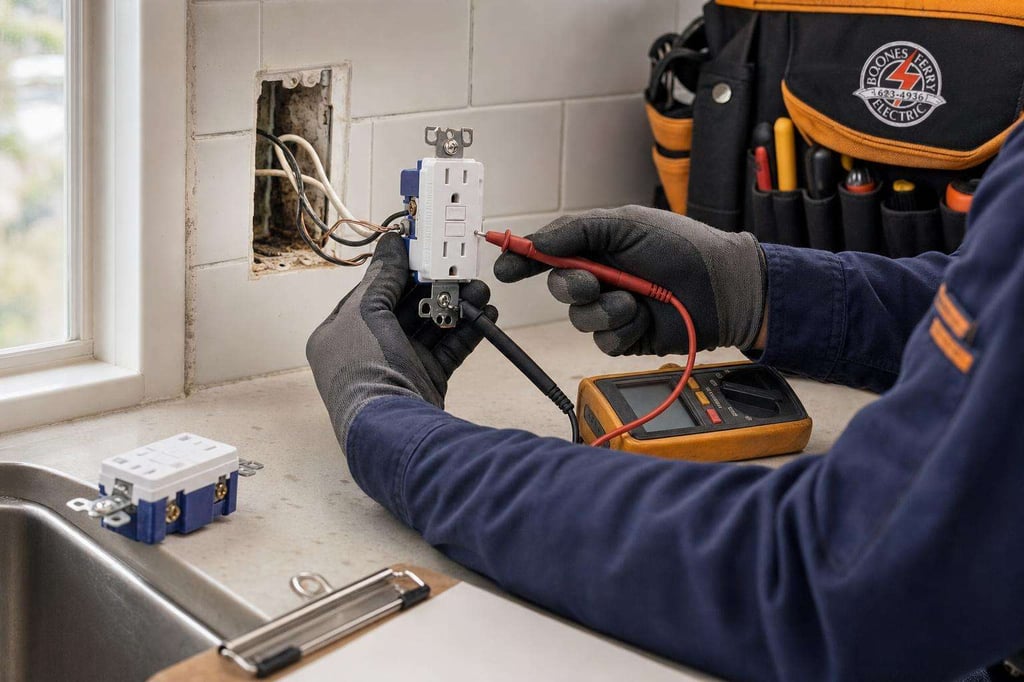
When a Rental GFCI Keeps Tripping, the Outlet May Not Be the Real Problem
Ground-fault circuit interrupters, commonly called GFCIs, are important safety devices in rental homes, apartments, commercial spaces, and mixed-use properties. They are designed to shut power off quickly when they detect current leaking to an unintended path, which can happen around moisture, damaged wiring, faulty appliances, or deteriorated electrical components.
Because GFCI devices do wear out, it is easy to assume a tripping receptacle simply needs replacement. Sometimes that is true. However, in a rental setting, repeated GFCI trips can point to a larger issue that deserves a licensed electrician’s attention—especially when the same complaint comes back after a reset or after a device has already been replaced.
For property owners and managers in Wilsonville, Tualatin, Lake Oswego, Oregon City, and the Portland Metro area, identifying the cause correctly helps protect tenants, preserve the property, and avoid repeat service calls.
What a GFCI Trip Is Trying to Tell You
A GFCI does not trip for no reason. It trips because it senses an imbalance in the electrical current. That imbalance may be caused by something plugged in, something happening inside the wall, or a condition elsewhere on the circuit.
Common causes include:
- Moisture intrusion near kitchens, bathrooms, garages, laundry areas, outdoor receptacles, or crawlspace-adjacent wiring.
- Damaged cords or appliances such as refrigerators, microwaves, sump pumps, washers, or tenant-owned equipment.
- Loose or deteriorated wiring connections behind the receptacle or elsewhere on the circuit.
- Improper downstream wiring where multiple outlets are protected by one GFCI device.
- Overlapping circuit conditions that make it appear one outlet is the problem when the fault is farther away.
- Aging or worn GFCI devices that no longer operate reliably.
The key is not just whether the GFCI trips, but how often it trips, what is connected when it trips, and whether other outlets or equipment are affected.
Why Rental Properties Need a More Careful Evaluation
Rental properties often have more variables than owner-occupied homes. Tenants may not know which outlets are connected together, what previous repairs were completed, or whether an appliance has been causing intermittent problems. Property managers may receive only a short maintenance note such as “bathroom outlet keeps shutting off” or “kitchen outlet is dead.”
That limited information can make a simple device swap tempting. But repeated trips after replacement can mean the issue is not the GFCI device itself. A qualified Wilsonville electrician can test the circuit, inspect connections, evaluate downstream loads, and determine whether the problem is related to the receptacle, wiring, appliance use, moisture, or circuit design.
Signs the Issue Goes Beyond a Simple Replacement
Some GFCI concerns should be treated as circuit-level problems until proven otherwise. If any of the following patterns appear, the safest next step is professional evaluation rather than repeated resets.
The GFCI trips immediately after being reset
An immediate trip can indicate an active ground fault, incorrect wiring, a failed device, or something connected downstream that is still creating an unsafe condition.
The GFCI trips when a specific appliance runs
If the trip happens when a refrigerator, garbage disposal, washing machine, outdoor tool, or tenant appliance turns on, the issue may involve the equipment, the circuit, or both. A licensed electrician can help determine whether the outlet is reacting properly to a fault or whether the circuit requires repair or upgrade.
Multiple outlets lose power at once
Many GFCI devices protect additional receptacles downstream. A tenant may report that several outlets are dead, even though only one GFCI needs to be reset—or the downstream wiring may be the actual source of the fault.
The issue appears after rain, cleaning, or high humidity
Moisture-related trips are common around exterior receptacles, garages, bathrooms, kitchens, basements, and utility areas. Water intrusion should be taken seriously because it can affect wiring, boxes, covers, and connected equipment.
The same location has a history of repeat complaints
If maintenance records show recurring GFCI issues in the same unit or room, there may be a deeper electrical repair need. Replacing the device without addressing the cause can lead to ongoing tenant frustration and unresolved safety concerns.
Tenant Reports That Property Managers Should Document
Good information helps an electrician diagnose the issue more efficiently. When a tenant reports a GFCI problem, property managers can ask a few practical questions before scheduling service.
Helpful details include:
- Which room or area is affected?
- Does the GFCI reset, or does it trip again immediately?
- What was plugged in when the trip occurred?
- Did the issue happen after rain, cleaning, or appliance use?
- Are any other outlets, lights, or appliances affected?
- Has this happened before in the same location?
Tenants should not be asked to remove devices, open outlet covers, or troubleshoot wiring. Electrical work should always be evaluated and completed by a licensed professional.
Where GFCI Problems Often Show Up in Rentals
GFCI protection is commonly associated with areas where water and electricity may be close together. In rental properties, these locations often see frequent use and a wide range of plugged-in devices.
Kitchens
Kitchen GFCI trips may involve countertop appliances, dishwashers, garbage disposals, refrigerator circuits, or moisture around sinks. In older rentals, the circuit layout may not match modern usage needs.
Bathrooms
Hair dryers, styling tools, exhaust fan issues, and humidity can all contribute to nuisance or legitimate trips. A residential electrical repair visit can help determine whether the device is worn, miswired, or responding to a real fault.
Laundry areas
Washers, utility sinks, and nearby receptacles can create conditions where GFCI protection is especially important. Trips during machine operation should be evaluated carefully.
Garages and exterior areas
Outdoor covers, weather exposure, extension cord use, irrigation equipment, and holiday lighting can all contribute to recurring trips. Moisture intrusion or damaged exterior receptacles may require electrical repairs or electrical upgrades.
Commercial tenant spaces
In retail, office, light industrial, or service-based spaces, GFCI trips may involve equipment loads, shared circuits, or specialized installations. Commercial electrical services can help verify whether the installation supports the way the space is being used.
Why “Just Replace the GFCI” Can Miss the Larger Issue
A new GFCI device can solve the problem if the old device is defective or worn. But if the circuit has a ground fault, moisture exposure, wiring damage, or equipment-related leakage, a replacement may trip just like the old one. In some cases, the new device may appear to create a problem because it is more sensitive or functioning correctly.
A licensed electrician can test the device and the circuit rather than relying on guesswork. For rental owners, this approach supports better documentation and helps distinguish between tenant appliance issues, property wiring concerns, and needed electrical installation updates.
When to Request Electrical Service
Property owners, landlords, and facility managers should request service when GFCI trips are recurring, unexplained, associated with moisture, or affecting essential equipment. Service is also appropriate when a tenant reports heat, buzzing, discoloration, a burning smell, or outlets that will not reset.
Boones Ferry Electric provides residential electrical services, commercial electrical services, industrial electrical services, electrical repairs, electrical upgrades, and electrical installations throughout Wilsonville and the Portland Metro area. Whether the issue is in a rental home, apartment unit, office space, or industrial setting, a professional evaluation can help identify the cause and recommend the appropriate next step.
Work With a Local Licensed Electrician
Recurring GFCI trips should not be ignored or treated as a routine reset problem. The device may be doing exactly what it is designed to do: warning that something on the circuit needs attention.
If you manage or own rental property in Wilsonville, Tualatin, Lake Oswego, Oregon City, or the greater Portland Metro area, Boones Ferry Electric can help evaluate the issue safely and professionally. For practical next steps, Request service and talk with the team about timing, scope, and the right path for your situation.
Frequently Asked Questions
No. A single reset may restore power, but repeated trips can indicate moisture, a faulty appliance, damaged wiring, or another circuit issue. The tenant should report the pattern to the property manager and avoid using the affected outlet until it is evaluated by a licensed electrician.
Sometimes a worn GFCI device is the problem, but not always. If the new device trips too, the cause may be downstream wiring, moisture intrusion, connected equipment, or another condition on the circuit. A professional evaluation helps identify the actual source before more parts are replaced.
- Which room or outlet is affected
- Whether the GFCI resets or trips immediately
- What was plugged in at the time
- Whether the issue happens during rain, cleaning, or appliance use
- Whether other outlets or appliances lose power
They should be taken seriously because kitchens, bathrooms, laundry areas, garages, and exterior locations often involve moisture. A recurring trip may be the GFCI responding to a real safety concern, so the circuit should be inspected by a licensed electrician.
Electrical work should always be evaluated and completed by a licensed professional. Tenants should not open outlet covers or inspect wiring, and landlords should avoid repeated device replacement without confirming the underlying cause.