

Why Electrical Load Imbalances Matter in Commercial Buildings
Commercial buildings rely on steady, well-distributed electrical power to keep lighting, HVAC systems, office equipment, production areas, and tenant spaces running reliably. When electrical loads are not balanced across phases or circuits, the system may work harder than it should. Over time, that can contribute to higher operating costs, nuisance electrical issues, and added strain on equipment.
For property owners, facility managers, and business operators in Wilsonville, Tualatin, Lake Oswego, Oregon City, and the greater Portland Metro area, identifying electrical load imbalances early can help support safer, more efficient building performance. A licensed electrician can evaluate the system, identify the source of the imbalance, and recommend appropriate electrical upgrades or repairs.
What Is an Electrical Load Imbalance?
An electrical load imbalance happens when power demand is unevenly distributed across an electrical system. In many commercial and industrial settings, buildings use three-phase power. Ideally, each phase carries a relatively even share of the electrical demand. When one phase carries significantly more load than the others, components can experience unnecessary stress.
Load imbalances may also occur at the circuit level when certain panels, tenant areas, or equipment groups draw more power than the system was designed to handle. This is especially common in buildings that have grown over time, added new tenants, upgraded equipment, or changed how spaces are used.
Common Causes of Load Imbalances
Electrical load issues can develop gradually or appear after a building change. Common causes include:
- Tenant improvements: New office layouts, kitchen equipment, server rooms, or specialty equipment can change power demand.
- Uneven equipment distribution: HVAC units, compressors, machinery, and large appliances may not be evenly assigned across phases.
- Aging electrical panels: Older panels may not match current building usage or modern equipment needs.
- Repeated electrical additions: Over time, circuits may be added without a full review of overall system balance.
- Industrial or commercial equipment changes: New production, refrigeration, or mechanical systems can create demand shifts.
- Shared building systems: Multi-tenant properties may have common areas, exterior lighting, elevators, and HVAC loads that need careful coordination.
How Load Imbalances Can Contribute to Rising Costs
When a commercial electrical system is not properly balanced, the effects may show up in more than one place. While utility rates, weather, equipment use, and occupancy all influence monthly costs, load imbalances can be one of the factors behind rising electrical expenses.
Equipment May Work Harder
Motors, HVAC equipment, pumps, and other electrical systems may experience additional strain when supplied by uneven power. This can contribute to reduced performance, more frequent service calls, or shorter equipment life.
Heat Can Build Up in Electrical Components
Overloaded circuits, panels, or conductors can generate excess heat. Heat is a warning sign that should be evaluated promptly by a licensed electrician, especially in commercial electrical services where uptime and safety are critical.
Unplanned Downtime Can Become More Likely
Recurring breaker trips, flickering lights, or equipment shutdowns can interrupt business operations. For tenant-occupied buildings, those interruptions may affect multiple businesses at once.
Future Electrical Upgrades May Become More Complex
If imbalances are not addressed before new equipment or tenant improvements are added, future electrical installation projects may require more troubleshooting, planning, and correction.
Warning Signs Your Building May Have an Electrical Load Issue
Not every electrical problem is caused by load imbalance, but these signs are worth investigating:
- Frequent breaker trips or blown fuses
- Flickering or dimming lights in specific areas
- Warm panels, switches, outlets, or electrical rooms
- Equipment that runs inconsistently or shuts down unexpectedly
- Noticeable changes in utility costs after adding equipment or tenants
- Buzzing sounds from panels or electrical components
- Repeated repairs to the same circuits or equipment feeds
Electrical work should always be evaluated and completed by a licensed professional. If you notice warning signs, avoid opening panels or attempting repairs yourself.
Why Multi-Tenant Commercial Buildings Need Special Attention
Multi-tenant properties can be especially vulnerable to load imbalance because each tenant may use power differently. A medical office, restaurant, retail shop, warehouse area, and professional office can all place different demands on the same building infrastructure.
Before approving tenant improvements or adding major equipment, building owners should consider a professional electrical evaluation. A Portland Metro electrician can help determine whether the existing service, panels, and circuits are appropriate for the proposed use.
Questions Property Managers Should Ask
- Has the electrical system been reviewed since the last tenant change?
- Are high-demand loads evenly distributed?
- Do panels have capacity for planned electrical upgrades?
- Are any circuits repeatedly causing service issues?
- Is documentation available for past electrical installation work?
How a Licensed Electrician Evaluates Load Imbalances
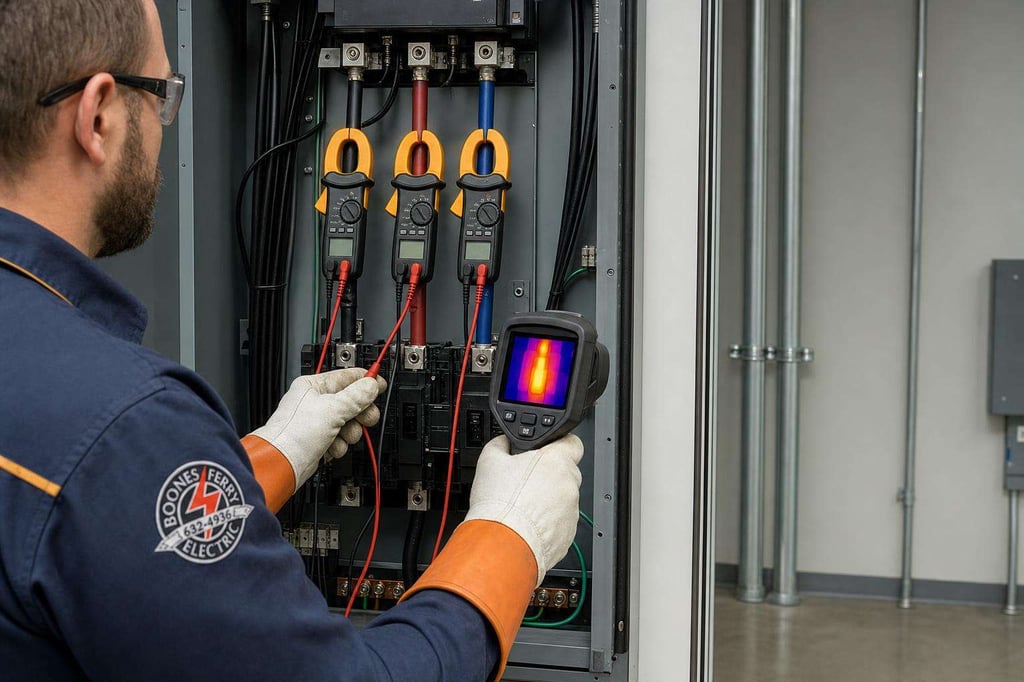
A qualified commercial electrician can review the building’s electrical system and look for conditions that may contribute to imbalance or rising costs. Depending on the property, this may include:
- Inspecting panels, breakers, feeders, and service equipment
- Measuring loads across phases and key circuits
- Reviewing equipment demand and tenant usage patterns
- Identifying overloaded or underused circuits
- Checking for heat, corrosion, loose connections, or damaged components
- Recommending electrical repairs, redistribution of loads, or panel upgrades when appropriate
For facilities with production equipment or heavier electrical demand, industrial electrical services may also be needed to evaluate machinery feeds, motor loads, controls, and power distribution.
Potential Solutions for Commercial Load Imbalances
The right solution depends on the building, equipment, and condition of the existing system. Common recommendations may include:
- Redistributing circuits: Moving loads so demand is more evenly balanced.
- Panel improvements: Updating or reorganizing panel schedules and circuit assignments.
- Electrical repairs: Correcting damaged, loose, overheated, or aging components.
- Electrical upgrades: Installing panels, feeders, or service equipment better suited to current demand.
- Dedicated circuits: Providing proper circuits for high-demand equipment.
- Planning for future growth: Designing electrical installation work around upcoming tenant or equipment needs.
Preventive Planning Can Help Control Costs
Commercial electrical systems should be reviewed as building use changes. If your property has added tenants, expanded operations, changed HVAC equipment, or installed new commercial equipment, it may be time for a professional assessment.
Boones Ferry Electric provides commercial electrical services, industrial electrical services, residential electrical repair, electrical installation, and electrical upgrades for customers in Wilsonville and across the Portland Metro area. Whether you need a Wilsonville electrician for a commercial building evaluation or support planning a larger upgrade, a licensed electrician can help you make informed decisions.
Request Service from Boones Ferry Electric
If rising costs, recurring breaker trips, or equipment issues have you concerned about a possible electrical load imbalance, Boones Ferry Electric can help evaluate your system and recommend practical next steps. For practical next steps, Request service and talk with the team about timing, scope, and the right path for your situation.
Frequently Asked Questions
It can be a contributing factor. Uneven loads may cause equipment to work harder, increase heat in electrical components, or lead to recurring service issues. Utility rates, occupancy, weather, and equipment use also affect costs, so a licensed electrician should evaluate the building before drawing conclusions.
Document where and when the issue occurs, note any recent tenant improvements or new equipment, and schedule an evaluation with a licensed electrician. These symptoms may point to overloaded circuits, loose connections, aging components, or load imbalance.
Yes. New tenants may add HVAC demand, kitchen equipment, computers, refrigeration, lighting, or specialty systems. Reviewing electrical capacity and load distribution before work begins can help avoid delays, code concerns, and recurring electrical problems after move-in.
There is no one-size-fits-all schedule, but an evaluation is wise when tenant use changes, major equipment is added, panels feel warm, breakers trip repeatedly, or utility costs change unexpectedly. A licensed electrician can recommend an appropriate maintenance approach for the property.
Yes. Boones Ferry Electric provides commercial electrical services and industrial electrical services in Wilsonville and the Portland Metro area. The team can evaluate load concerns, recommend electrical repairs or upgrades, and support safe electrical installation planning.