

Frequent breaker trips, flickering lights, or outlets that suddenly stop working can disrupt daily life and signal deeper electrical issues in older homes. While it’s easy to reset a breaker or swap out a bulb, recurring problems often point to concerns that go beyond simple inconvenience. Understanding what these symptoms mean is the first step toward maintaining a safe and reliable electrical system.
Recognizing the Signs: More Than a One-Time Glitch
Breakers are designed to protect your home by shutting off power when circuits are overloaded or a fault is detected. If you notice that a breaker trips repeatedly, lights flicker when appliances are used, or certain outlets seem unreliable, these are not just isolated incidents. They often indicate that your electrical system is under strain or that there may be wiring or panel issues needing attention.
Common Triggers for Breaker Trips in Older Homes
Older homes were not built to handle the electrical demands of today’s appliances and devices. Common triggers for breaker trips include plugging in multiple high-wattage appliances on the same circuit, using space heaters or air conditioners, or running kitchen equipment simultaneously. Over time, wiring insulation can degrade, and connections may loosen, further increasing the risk of overloads or faults.
What Flickering Lights and Dead Outlets Can Reveal
Flickering lights are often dismissed as minor annoyances, but they can indicate voltage fluctuations or loose wiring. Dead outlets may result from tripped GFCI outlets, but repeated failures could point to wiring problems behind the walls. Both symptoms suggest that the electrical system may not be distributing power safely or evenly throughout the home.
When Isolated Problems Become Patterns
A single breaker trip or flickering bulb may not be cause for alarm. However, if these issues recur, it’s important to look for patterns: Do certain appliances always trigger the problem? Are specific rooms affected more than others? Noticing these trends helps determine if the issue is limited to a single circuit or points to a larger concern with your home’s electrical panel or wiring.
Evaluating the Source: Load, Wiring, or Panel?
Recurring electrical issues typically stem from three main areas: overloaded circuits, aging or damaged wiring, or limitations in the main electrical panel. An overloaded circuit means too many devices are drawing power at once. Damaged or outdated wiring can’t safely carry current, leading to heat buildup and breaker trips. If your panel is original to the home or lacks capacity for modern needs, it may be time for an upgrade. For more on troubleshooting these issues, see our Residential Electrical Repair & Troubleshooting page.
When to Consider Repair vs. Panel Upgrade
If a single circuit is affected and the problem is traced to a specific appliance or loose connection, targeted repairs may resolve the issue. However, if multiple circuits are involved, or your panel is old and frequently overloaded, upgrading the panel may be the safer and more effective solution. A professional evaluation can help you decide which path is best for your home. Learn more about panel and service upgrades on our dedicated service page.
The Importance of Professional Evaluation
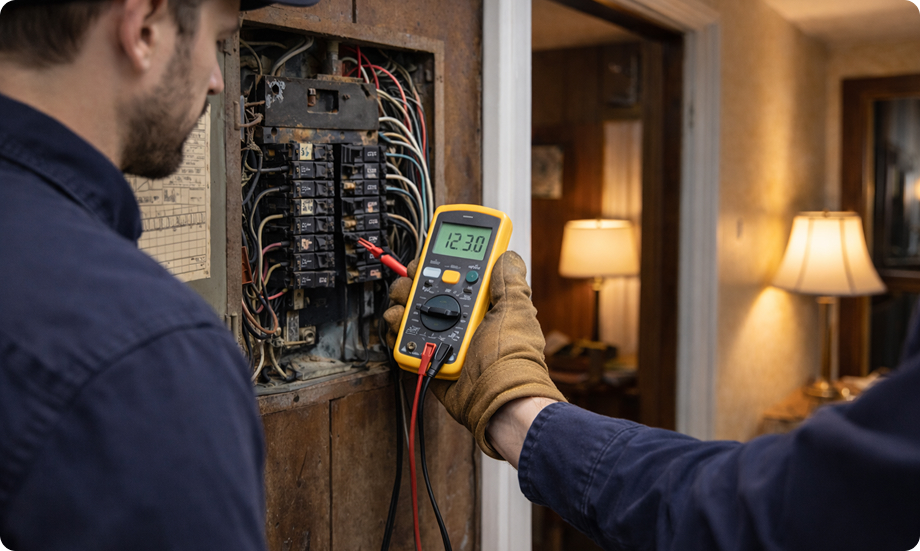
Diagnosing electrical problems in older homes requires more than trial and error. Licensed electricians use specialized tools to test circuits, inspect wiring, and assess panel capacity. Attempting DIY fixes without the right knowledge can create safety risks. A professional evaluation ensures that both immediate and underlying issues are identified before they lead to bigger problems.
What to Expect During an Electrical Assessment
When you schedule an assessment, an electrician will review your electrical panel, test circuits, and check for signs of overheating or outdated wiring. They’ll ask about your daily usage and any patterns you’ve noticed. Based on their findings, they’ll recommend repairs, upgrades, or maintenance to restore safe and reliable power throughout your home.
Preventing Future Electrical Problems
Regular maintenance and timely upgrades can prevent recurring issues in older homes. Simple steps like avoiding overloading outlets, using surge protectors, and scheduling periodic electrical inspections help keep your system running smoothly. If you’re planning home improvements or adding new appliances, consult an electrician to ensure your system can handle the added load.
Recurring breaker trips and flickering lights are more than just minor annoyances—they’re signs that your home’s electrical system needs attention. By understanding the causes and knowing when to seek professional help, you can protect your home and avoid unexpected outages. If you’re experiencing these problems, consider reaching out to a licensed electrician for a thorough evaluation and practical solutions tailored to your home’s needs.